
Raising Meat Chickens: From Brooder to Pasture
Today, we’re excited to take you behind the scenes as we embark on the journey of raising meat chickens, from the moment they arrive as baby chicks to their eventual transition to pasture. We’re sharing the ins and outs from brooder to pasture.
Setting Up the Brooder
Our primary goals for preparation are: bedding, food & water, security, and warmth for the chicks. Despite the daytime summer heat, we set up heat lamps to provide extra warmth during the cooler nights. New chicks require about 95F for the first week, decreasing that temperature by 5 degrees each week until week 4 or 5 when we find (in summer) they can generally regulate their own temperature without assistance.
It is also vital to create spaces within the brooder where the chicks can getaway from the heat if they want to cool down. These “cool zones” are the areas where we place their food and water. We watch their activity level to determine their well-being. When chicks are panting, they are too warm. If they are piled up, they are too cool and in danger of smothering each other.
We utilize a deep-litter method with wood shavings, and layer fresh chips in as manure builds up. That manure later goes to our compost bin when we move the chicks to pasture.
Food is set up in an “all you can eat” tray, and water is refreshed twice daily. Our chicks are fed non-GMO broiler starter feed (22% protein) for the first 4weeks.
In addition to providing warm shelter, a brooder needs to be secure from predators. Consider those that dig under, as well as critters who can climb fences. We also keep a locking door on the brooder to keep clever predators out.
Magic Water for Health
To give our chicks a healthy start, we prepare “magic water,” a mix of garlic cloves, apple cider vinegar, honey, and water. This immune-boosting elixir helps hydrate the chicks and promotes overall wellness in their early days.
Constructing Chicken Tractors
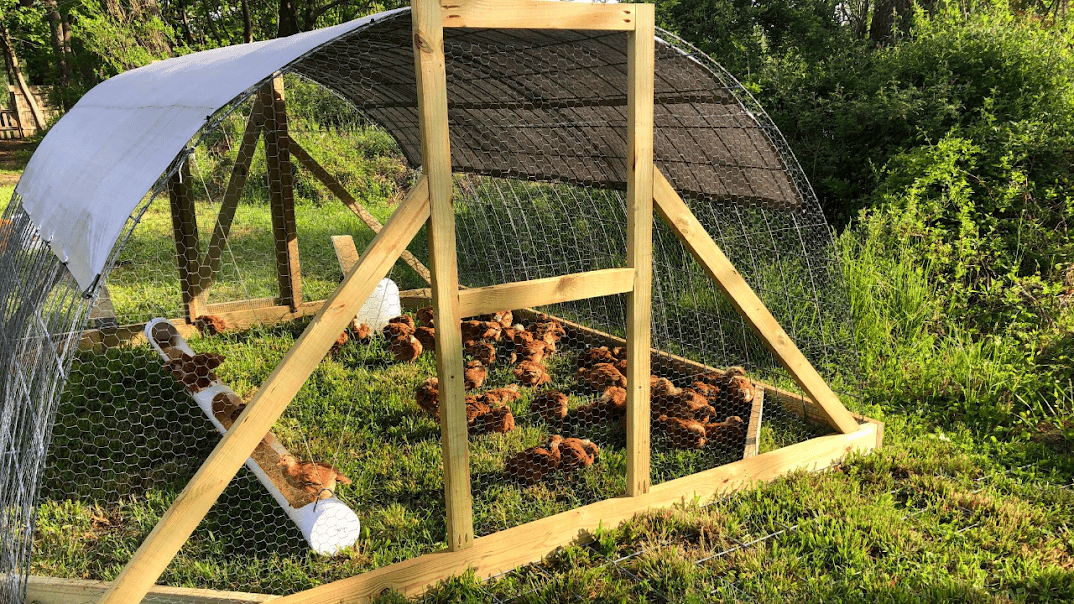
As the chicks grow, we planned their transition to pasture by constructing mobile chicken tractors, which provide ample space for the chickens to roam while protecting them from predators. The term chicken tractor stems from the idea that the mobile chicken run provides many functions of a real tractor as chickens also dig, cultivate and fertilize the pasture. Their presence on the pasture naturally improves the quality of the soil, while life on the pasture provides them with grass, sunshine, fresh air and an endless supply of insects to hunt for.
We designed our mobile tractors and custom-built dolly to accommodate 60 chickens per tractor, providing each chick with 2 square feet of fresh grass each morning and evening.
Other features we added to our design include a solar-powered electric line along the bottom, to prevent predators from digging under, and a hanging tray feeder that moves with the pen.
Transition to Pasture
With the brooder days behind us, we eagerly move our chickens out to pasture. We chose Freedom Ranger chickens for their excellent foraging abilities and activity level. Witnessing them pecking away at the grass is a testament to the natural way chickens should behave.
Feeding Program
We feed only non-GMO grain from a local feed mill. The transition to Grower Feed (20% protein) happens at 4 weeks, and they stay on that until 8 weeks, with Finisher (18-19% protein) for the final 2 weeks.
Conclusion
Why choose hard work vs easy purchase? Raising meat chickens at Life at the Nest is not just a hobby; it’s a commitment to ethical and sustainable farming practices. From the careful setup of the brooder to the construction of mobile chicken tractors for the eventual transition to pasture, every step is undertaken with the well-being of our chickens in mind. Through our shared experiences, we hope to inspire others to embrace the rewarding path of small-scale chicken farming and to cultivate a deeper appreciation for the food on our plates.
Watch
 VideoRaising Meat Chickens & Chicken Tractor DesignLife At The NestWatch on YouTube(opens in a new tab)
 VideoRaising Meat Chickens Part 2 - Moving to PastureLife At The NestWatch on YouTube(opens in a new tab)
 VideoButchering 112 chickens in a few hours!Life At The NestWatch on YouTube(opens in a new tab)
Comments
No comments yet
Leave a comment