Seed Starting: What to Sow Indoors
The anticipation of starting a garden is thrilling, but success requires careful planning; and February is a great time to start! Gardeners must decide which to start indoors and which to sow directly outside. Knowing which vegetables thrive best under which conditions is indispensable. Here are the vegetables I prioritize for indoor starts:
# of weeks before last frost, to start indoors, in parentheses
Broccoli (6-8 weeks) & Cauliflower (8-10 weeks)
These cruciferous vegetables are both cool weather vegetables. Get a jumpstart indoors in winter/early spring. They are easy to transplant at approximately 2 weeks before last frost. Also consider starting indoors in mid summer for your fall garden.
Cabbage (6-8 weeks)
Due to a longer growing season, cabbage is best started indoors. Transplant cabbage 2-3 weeks before last frost. Also consider starting indoors in mid summer for your fall garden.
Brussels Sprouts (12 weeks)
Brussels are best as a fall crop. Start indoors 12-16 weeks before first expected Fall frost. Harden off and transplant approximately 8 weeks before first Fall frost.
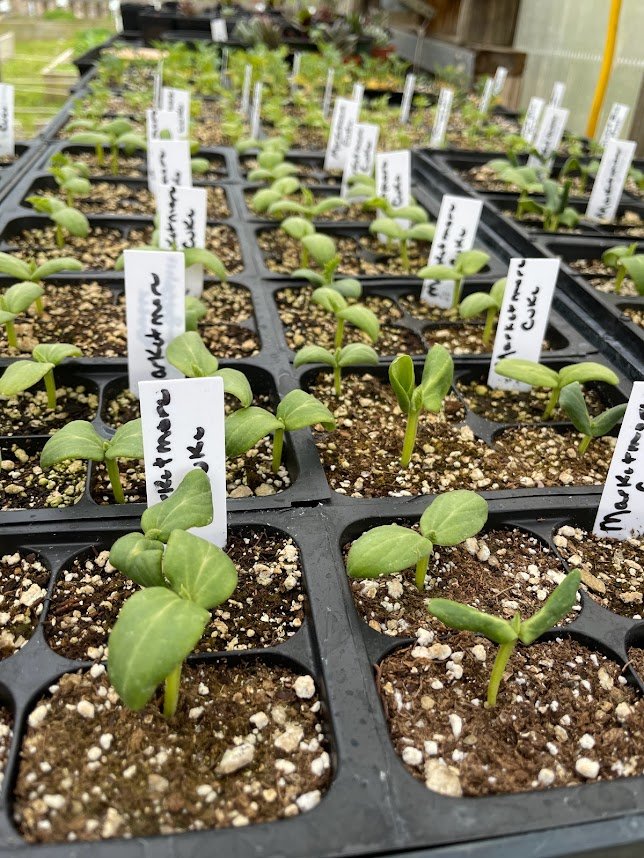
Cucumbers (4-6 weeks)
A warm weather crop with a long growing season, starting indoors helps give you a jump start on getting fruit to set early. They require a soil temp of 65-70F to germinate (for me, in zone 6,that doesn’t happen until mid May) so an early start indoors is ideal. Be careful not to disturb roots-consider starting in peat pots or paper pots and plant in the pot.
Celery (6 weeks)
Celery prefers cooler growing temp (average 60F) and have a long growing period, up to 140 days. For early fall harvest, start indoors 6 weeks before last frost in spring. Transfer seedlings to individual peat or paper pots. Harden off and transplant when 6” tall. 80-140 days until harvest.
Herbs
Basil, Comfrey, Cilantro, Dill, Marjoram, Mint, Oregano, Parsley, Rosemary, Sage, Savory, Tarragon & Thyme all need lots of time to develop. Waiting for the last frost to plant seeds will delay your harvest until late in the season. Consider starting indoors, or purchase seedlings from a local nursery to ensure harvest in the same season.
Lettuce
Though I would not grow lettuce for transplant (its roots are easily disturbed and failure rate is high) I do give lettuce a jumpstart by warming the soil. Lettuce is a cool weather crop, but cannot be direct sown until the soil is workable. Consider making mini greenhouse tunnels with pvc hoops and greenhouse plastic. Allow the ground to warm up under the mini greenhouse and sow seeds when the soil is loosened up.
Eggplant, Peppers (6-8 Weeks)
Both slow growers, with long growing seasons (60-80+ days to maturity) these warm weather crops should be started indoors 6-8 weeks before last frost. Keep inside until well past the danger of frost.
Melons (2-4 Weeks)
Warmer climates with longer growing seasons can sow directly outdoors, but climates with shorter growing seasons need ahead start to give melons adequate time to bear fruit. Transfer well past the last frost date.
Pumpkins (3-4 Weeks)
In cooler climates, starting seeds indoors will help ensure you have pumpkins ready before the first Fall frost. If your Halloween and Thanksgiving depend on home-grown pumpkins, sow indoors.
Tomatoes (6-8 Weeks)
Tomatoes generally reach maturity in 100-140days from the day you sow them, so indoor start is almost essential if you want fruit before frost. Luckily, they are one of the easiest to sow from seed.
Winter Squash (3-4 weeks)
Hard skinned winter squash (Acorn, Butternut, Spaghetti, Hubbard) require 60-110 days to maturity. Start indoors to ensure fruit before Fall frost. Transplant 1-2 weeks after last frost date. Best to grow in peat or paper pots and plant in the pot to avoid transplant shock from root disturbance. **Note: Direct sow summer squash/ “soft-skinned” squash, ie zucchini, yellow squash, patty pan.

Comments
No comments yet
Leave a comment